Electrode Placement Guide: A Comprehensive Overview
MyHealthBlitz.com’s TENS Electrode Placement Atlas, dated 2006, details strategies for various pain points, offering a visual guide for optimal electrode positioning.
Transcutaneous Electrical Nerve Stimulation (TENS) relies heavily on precise electrode placement for effective pain management. The MyHealthBlitz.com atlas, a valuable electrode placement guide PDF, emphasizes that correct positioning maximizes therapeutic benefits. Understanding anatomical landmarks and pain referral patterns is crucial; the guide visually demonstrates these concepts.
Successful TENS therapy isn’t simply about applying electrodes – it’s about targeting the specific nerves responsible for transmitting pain signals. The atlas provides clear illustrations for common conditions like shoulder, neck, and back pain, showing how electrode configurations can be adjusted based on whether pain is localized or widespread.
Proper placement ensures the electrical impulses reach the intended nerve fibers, modulating pain perception. Incorrect placement may result in minimal relief or even discomfort. This introductory guide, available as a PDF, serves as a foundational resource for both patients and clinicians seeking to optimize TENS unit utilization.
Understanding TENS Units and Their Function
TENS units work by delivering small electrical impulses through the skin to stimulate nerves. These impulses interfere with pain signals traveling to the brain, providing relief. The electrode placement guide PDF from MyHealthBlitz.com doesn’t delve into the unit’s mechanics, but understanding this principle is vital for effective use.
Different TENS unit settings – frequency, pulse width, and intensity – influence the type of pain relief achieved. The placement of electrodes directly impacts how these settings affect the targeted nerves. The guide focuses on where to place the electrodes, assuming the user understands basic unit operation.
Essentially, TENS units don’t “cure” pain; they manage it. The PDF resource highlights that strategic electrode placement, combined with appropriate unit settings, can significantly reduce discomfort. It’s a non-invasive method, making proper understanding and application, as detailed in the guide, paramount for successful pain modulation.
Safety Precautions for TENS Unit Use
While the MyHealthBlitz.com electrode placement guide PDF concentrates on application, prioritizing safety is crucial. Never use a TENS unit if you have a pacemaker or other implanted electronic device. Avoid placement over the carotid sinus (neck), eyes, or directly over the heart.
Individuals with epilepsy or pregnant women should consult a healthcare professional before using a TENS unit. Ensure the skin is clean and dry before applying electrodes to maximize conductivity and prevent irritation. Regularly inspect the skin under the electrodes for any signs of redness or discomfort.
Do not exceed the recommended intensity levels. Start with the lowest setting and gradually increase until relief is achieved. The PDF doesn’t explicitly detail these precautions, but responsible use, guided by a physician, is essential. Discontinue use and consult a doctor if pain worsens or new symptoms arise.
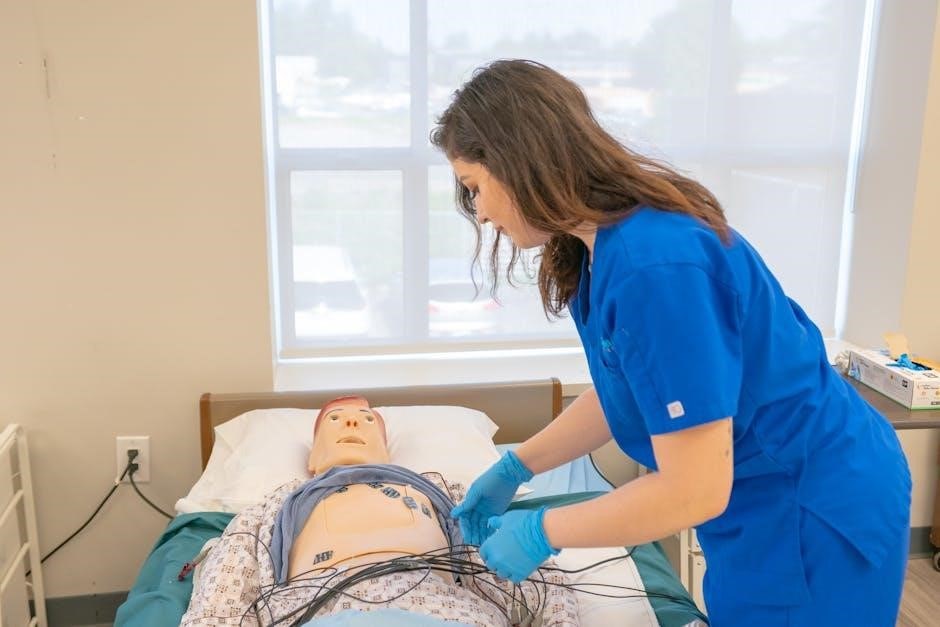
Specific Pain Conditions & Electrode Placement
The MyHealthBlitz.com electrode placement guide PDF outlines specific electrode arrangements for conditions like shoulder, neck, and back pain, targeting localized discomfort.
Shoulder Pain Electrode Placement
According to the MyHealthBlitz.com guide, shoulder pain electrode placement varies based on whether pain affects both shoulders or a single shoulder. For generalized stiffness or soreness in both shoulders, one electrode should be positioned on the bulk of the shoulder muscle, close to the neck.

The second electrode is then placed closer to the shoulder’s edge, avoiding direct placement over the bone – a soft, springy feel indicates correct positioning. When addressing pain in only one shoulder, the higher electrode remains in the same location as the two-shoulder configuration.
Crucially, the second electrode, originally intended for the opposite shoulder, is instead moved to lie directly underneath the affected shoulder, concentrating the TENS unit’s effect on the painful area. This targeted approach, detailed in the electrode placement guide PDF, aims to provide localized pain relief.
Both Shoulders – General Placement
As outlined in the MyHealthBlitz.com TENS Electrode Placement Atlas, when addressing stiffness or soreness affecting both shoulders simultaneously, a specific electrode arrangement is recommended. The initial electrode is carefully positioned on the substantial muscle mass located close to the base of the neck on each shoulder.
The second electrode for each side is then placed closer to the outer edge of the shoulder, ensuring it avoids direct contact with the underlying bone structure. A simple test – pressing lightly on the intended placement area – confirms correct positioning; a soft, springy sensation indicates the muscle tissue, while a hard feel suggests bone.
This dual electrode placement, detailed within the electrode placement guide PDF, aims to broadly address muscle tension and discomfort across both shoulder regions, promoting overall relief and improved mobility.
Single Shoulder – Targeted Placement
The MyHealthBlitz.com TENS Electrode Placement Atlas provides guidance for scenarios involving discomfort in only one shoulder. In these instances, a modified electrode arrangement is employed to focus treatment on the affected side. The higher electrode maintains the same positioning as utilized in the ‘both shoulders’ configuration – placed on the bulk of the muscle near the neck.
However, instead of a second electrode on the opposite shoulder, the electrode originally intended for that side is relocated to lie directly underneath the first electrode on the symptomatic shoulder. This concentrated placement, as detailed in the electrode placement guide PDF, delivers a more targeted stimulation to the specific area experiencing pain or stiffness.
This approach ensures maximum therapeutic effect for isolated shoulder discomfort, optimizing the TENS unit’s effectiveness for localized relief and promoting faster recovery.
Neck Pain Electrode Placement
According to the MyHealthBlitz.com TENS Electrode Placement Atlas, effective neck pain management involves strategic electrode positioning. The electrode placement guide PDF doesn’t detail specific placements within this section, but implies a focus on surrounding muscle groups. Generally, TENS for neck pain utilizes a configuration designed to encompass the affected area and surrounding musculature.
Placement typically involves positioning electrodes to bracket the source of discomfort, targeting muscles contributing to the pain. This often includes the trapezius, sternocleidomastoid, and other neck muscles. The goal is to create a comfortable and effective stimulation pattern that interrupts pain signals.
Experimentation with slight adjustments in electrode location may be necessary to pinpoint the optimal placement for individual anatomy and pain presentation, as detailed in broader TENS unit usage guides.
Headaches & Migraine Relief Electrode Placement

The MyHealthBlitz.com TENS Electrode Placement Atlas, a valuable electrode placement guide PDF, briefly lists “Headaches/Migraines” as a pain condition addressed by TENS therapy. However, it doesn’t provide detailed placement instructions within the document itself. Effective headache and migraine relief with TENS often involves targeting muscles in the neck and shoulders, as these areas frequently contribute to tension headaches.
Common placements include electrodes on the trapezius muscles, the base of the skull, and along the sternocleidomastoid muscle. Some individuals find relief by placing electrodes on the temples, but caution is advised and professional guidance is recommended for facial applications.
Experimentation and careful attention to sensation are crucial for finding the optimal electrode placement for individual headache or migraine patterns, as detailed in comprehensive TENS unit manuals.

Back Pain Electrode Placement
According to the MyHealthBlitz.com electrode placement guide PDF, “Back Pain” is a key area addressed by TENS therapy, occupying a significant section within the atlas. The document indicates that back pain electrode strategies vary depending on whether the discomfort is located in the upper or lower back, necessitating distinct approaches for optimal relief.
While the PDF doesn’t detail specific placements, general TENS application for back pain involves positioning electrodes along the paravertebral muscles – running alongside the spine – or directly over the painful area. It’s crucial to avoid placing electrodes directly on the spine itself.
Successful back pain management with TENS often requires experimentation to pinpoint the precise locations that provide the most effective pain modulation, guided by individual sensitivity and comfort levels.
Upper Back Pain – Electrode Strategies
The MyHealthBlitz.com electrode placement guide PDF, while not providing exhaustive detail for upper back pain specifically, implies a strategy focused on the paravertebral muscles. This involves placing electrodes alongside the spine in the thoracic region, aiming to target the muscles supporting the upper back and shoulder blades.
A common approach, suggested by the atlas’s general principles, is a bilateral placement – two electrodes positioned symmetrically on either side of the spine. Alternatively, a unilateral placement can be used if the pain is localized to one side, with electrodes positioned directly over the affected muscle area.
The guide emphasizes feeling for soft, springy muscle tissue, avoiding bony prominences. Experimentation with electrode positioning is key to finding the optimal configuration for individual pain relief, as detailed in the PDF.
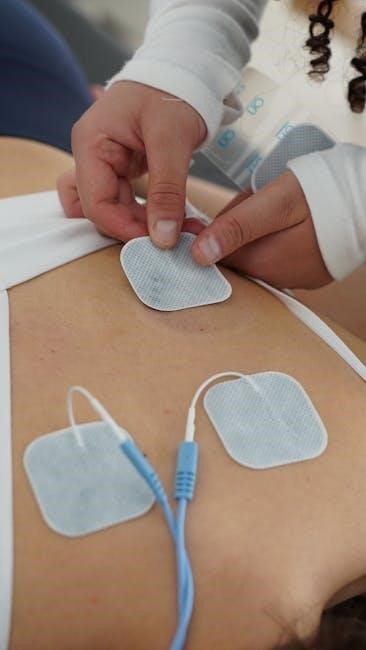
Lower Back Pain – Electrode Strategies
The MyHealthBlitz.com electrode placement guide PDF doesn’t detail specific lower back strategies, but its principles apply. Targeting the lumbar paravertebral muscles is a common approach, placing electrodes alongside the spine in the lower back region. This aims to alleviate muscle tension contributing to pain.
Similar to upper back pain, bilateral placement – two electrodes symmetrically positioned – is frequently used. For localized pain, unilateral placement directly over the affected area can be effective. The guide stresses avoiding bony structures; ensure electrodes rest on soft, springy muscle tissue.
Consider electrode placement across the lower back muscles, rather than directly on the spine. Experimentation, guided by the PDF’s general principles, is crucial for personalized pain relief. Adjusting placement can significantly impact effectiveness.
Arm Pain Electrode Placement
According to the MyHealthBlitz.com electrode placement guide PDF, addressing arm pain requires strategic electrode positioning. For generalized arm soreness, placing electrodes on the biceps and triceps muscles can provide broad relief. This targets the major muscle groups involved in arm movement and function.
For more localized pain, such as at the elbow or wrist, electrodes should be placed proximal to the pain site – closer to the shoulder. Avoid direct placement over joints or bony prominences. The guide emphasizes feeling for soft, springy muscle tissue to ensure proper adhesion and effectiveness.
Experimentation with electrode angles and spacing is encouraged. Some individuals find relief with electrodes placed parallel to the muscle fibers, while others prefer perpendicular placement. Remember to consult the PDF’s general guidelines for safe and effective TENS unit use.
Stomach Pain Electrode Placement
The MyHealthBlitz.com electrode placement guide PDF offers limited, yet crucial, guidance for stomach pain. It’s vital to note that TENS unit use for abdominal pain requires caution and isn’t universally recommended. Placement should never be directly on the stomach itself.
Instead, the guide suggests placing electrodes on areas surrounding the abdomen, such as the lower back and sides. This aims to indirectly influence nerve pathways associated with abdominal discomfort. Avoid placement over the liver or kidneys.
Experimentation is key, but always start with low intensity. The PDF stresses the importance of listening to your body and discontinuing use if pain increases. Due to the sensitive nature of the abdominal area, consulting a healthcare professional before using TENS for stomach pain is strongly advised.
Bowel/Intestinal Pain Electrode Placement
The MyHealthBlitz.com electrode placement guide PDF provides minimal specific instruction for bowel or intestinal pain, echoing the caution advised for stomach discomfort. Direct application of electrodes to the intestines is absolutely contraindicated. The document emphasizes indirect approaches, focusing on surrounding areas to modulate pain signals.
Recommended placements involve the lower back, mirroring strategies for lower abdominal pain. Electrodes can be positioned laterally, flanking the abdomen, avoiding direct contact with the digestive tract. The goal is to stimulate nerves that influence bowel function and pain perception, rather than directly targeting the affected organs.
As with all TENS applications, begin with the lowest intensity and gradually increase as tolerated. Discontinue use immediately if any discomfort arises. Consulting a physician before utilizing TENS for bowel or intestinal pain is crucial, given the complexities of these conditions.
Hip Pain Electrode Placement
According to the MyHealthBlitz.com electrode placement guide PDF, addressing hip pain with TENS involves targeting the surrounding musculature rather than direct application over the hip joint itself. The guide suggests several configurations depending on the location and nature of the discomfort.
For general hip pain, electrodes can be placed on the gluteal muscles – one on the upper portion and another lower down. Alternatively, placement along the iliotibial (IT) band can provide relief, particularly for lateral hip pain. Another strategy involves positioning electrodes on the lower back, targeting the lumbar nerves that innervate the hip region.
Experimentation with electrode placement is encouraged to find what works best for the individual. Remember to start with low intensity and gradually increase it, monitoring for any adverse reactions. Proper skin preparation and electrode adhesion are vital for effective pain management.
Sciatica Electrode Placement
The MyHealthBlitz.com electrode placement guide PDF outlines several approaches for managing sciatic pain using TENS therapy. Because sciatica originates from nerve compression in the lower back, treatment focuses on alleviating pressure and reducing inflammation along the nerve pathway.
A common technique involves placing electrodes on the lower back, flanking the spine, to target the affected nerve root. Another strategy utilizes placement on the buttock muscles (gluteals), specifically on the side experiencing pain. Some individuals find relief by positioning electrodes on the back of the thigh, following the sciatic nerve’s course.
The guide emphasizes that combining these placements can be beneficial. It’s crucial to experiment to determine the most effective configuration for individual anatomy and pain presentation. Always begin with a low intensity and gradually increase it, ensuring comfort throughout the session.
Knee Pain Electrode Placement
According to the MyHealthBlitz.com electrode placement guide PDF, addressing knee pain with TENS involves targeting the nerves supplying the joint and surrounding muscles. Several configurations are suggested, depending on the specific location and nature of the pain.
One common method involves placing electrodes directly over the kneecap (patella) and on the inner or outer side of the knee, depending on where the discomfort is most prominent. Another approach focuses on the muscles surrounding the knee – the quadriceps (front of thigh) and hamstrings (back of thigh) – to reduce muscle tension contributing to the pain.
The guide recommends experimenting with electrode placement to find what works best. It also suggests considering placement on the calf muscles, as they influence knee stability. Start with a low intensity and gradually increase it until a comfortable tingling sensation is felt, avoiding any muscle contractions.
Ankle Pain Electrode Placement
The MyHealthBlitz.com electrode placement guide PDF outlines strategies for alleviating ankle pain using TENS therapy, focusing on nerve stimulation and muscle relaxation. Effective placement depends on the source of the pain – whether it’s from a sprain, tendonitis, or arthritis.
A primary technique involves positioning electrodes around the medial and lateral malleoli (the bony bumps on either side of the ankle). This targets the nerves responsible for sensation in the ankle and foot. Another approach utilizes placement on the Achilles tendon and calf muscles, addressing potential muscle imbalances contributing to the discomfort.
The guide emphasizes the importance of experimenting with electrode locations to pinpoint the most effective configuration for individual pain patterns. Begin with a low intensity and gradually increase it until a comfortable tingling sensation is achieved, ensuring no muscle contractions occur. Proper skin preparation is also crucial for optimal conductivity.
Foot Pain Electrode Placement
According to the MyHealthBlitz.com electrode placement guide PDF, addressing foot pain with TENS requires strategic electrode positioning to target relevant nerves and tissues. The guide suggests several configurations depending on the location and nature of the pain – plantar fasciitis, neuropathy, or general soreness.
For plantar fasciitis, electrodes are often placed on the heel and along the arch of the foot, aiming to reduce inflammation and muscle tension. In cases of neuropathy, placement along the dorsal (top) surface of the foot and around the ankle can help modulate nerve signals. Experimentation is key to finding the optimal placement.
The guide stresses the importance of clean, dry skin for good electrode adhesion and conductivity. Start with a low intensity and gradually increase it until a comfortable sensation is felt. Avoid placing electrodes directly over bony prominences, and monitor for any skin irritation during use.

Additional Applications & Considerations
MyHealthBlitz.com’s guide highlights fatigue/relaxation uses, electrode size/shape guidelines, and troubleshooting common placement issues for enhanced TENS unit effectiveness.
Fatigue & Relaxation Electrode Placement
MyHealthBlitz.com’s TENS Electrode Placement Atlas includes a dedicated section for utilizing the unit to combat fatigue and promote relaxation. While primarily known for pain management, TENS can also stimulate endorphin release, contributing to a sense of well-being and reduced tiredness.
The guide doesn’t specify a single, definitive placement for fatigue; instead, it suggests experimenting with broader applications. Common approaches involve placing electrodes on larger muscle groups, such as the back or thighs, to provide a more generalized stimulation.
Users are encouraged to use lower intensity settings for relaxation purposes, focusing on a comfortable tingling sensation rather than strong muscle contractions. The goal is to induce a calming effect, not to actively treat pain. Individual responses will vary, so finding the optimal placement and intensity requires some experimentation and self-assessment.
Remember to consult with a healthcare professional before using TENS for fatigue, especially if you have underlying medical conditions.
General Guidelines for Electrode Size & Shape
MyHealthBlitz.com’s TENS Electrode Placement Atlas doesn’t dedicate extensive detail to electrode size and shape, but implies considerations based on the target area and individual comfort. Generally, larger electrodes are recommended for broader areas like the back, while smaller electrodes are suitable for more localized pain, such as a specific point on the shoulder.
The shape of the electrode also plays a role. Square or rectangular electrodes are versatile for most applications, providing consistent coverage. However, contoured electrodes can be beneficial for areas with complex anatomy, ensuring better contact and stimulation.
Electrode quality is crucial; using high-quality, conductive electrodes ensures effective signal transmission. Proper adhesion is also vital – skin should be clean and dry for optimal contact. Consider skin sensitivity; hypoallergenic electrodes may be necessary for individuals prone to irritation.
Experimentation within these guidelines is encouraged to find what works best for your body and specific needs.
Troubleshooting Common Placement Issues
MyHealthBlitz.com’s TENS Electrode Placement Atlas doesn’t explicitly detail troubleshooting, but common issues can be addressed with a systematic approach. If experiencing inadequate pain relief, first check electrode placement against the guide for the specific pain location. Ensure electrodes are firmly adhered to clean, dry skin – poor contact significantly reduces effectiveness.
Skin irritation is another frequent problem. Try hypoallergenic electrodes or repositioning electrodes slightly. If the sensation feels too intense, reduce the intensity level on the TENS unit. Conversely, if no sensation is felt, gradually increase the intensity.
Experiment with slight adjustments to electrode positioning; even small changes can impact results; If pain shifts or changes, reassess the placement based on the new sensation. Remember, individual responses vary, so finding the optimal placement may require some trial and error.
Resources for Further Information (PDF Guides)
A valuable resource for understanding TENS electrode placement is the “TENS Electrode Placement Atlas” created by MyHealthBlitz.com, available as a PDF. This guide, dated October 30, 2006, provides a comprehensive overview of electrode positioning for various pain conditions, including shoulder, neck, back, arm, and leg pain.
The atlas visually demonstrates optimal electrode placement for both single and bilateral pain, offering clear diagrams to aid understanding. It also covers applications beyond pain management, such as fatigue reduction and relaxation techniques. The document is accessible via Northwest Physio’s website, serving as a readily available reference.

While dated, the principles outlined in this PDF remain relevant for basic TENS unit operation and electrode placement. It’s a useful starting point for individuals seeking to maximize the benefits of their TENS therapy.