This manual unlocks the potential of your Canon PowerShot SX70 HS, guiding you through features and functions. Explore a new world of photographic possibilities with this comprehensive guide.
What’s in the Box?
Upon opening your Canon PowerShot SX70 HS package, you should find several key components ensuring a smooth start to your photographic journey. The box typically includes the Canon PowerShot SX70 HS camera body itself, ready for exploration. You’ll also receive a battery pack (NB-10L), essential for powering your adventures, and a battery charger (CB-2LE) to keep you shooting.
Furthermore, Canon provides a wrist strap for secure handling during use. A USB cable is included for transferring photos and videos to your computer, and you’ll find a user manual – this very guide – to help you understand all the features. Finally, there’s often a warranty card for peace of mind. Please verify all items are present and in good condition upon unboxing. Retain the original packaging for potential future needs.
Key Features of the SX70 HS
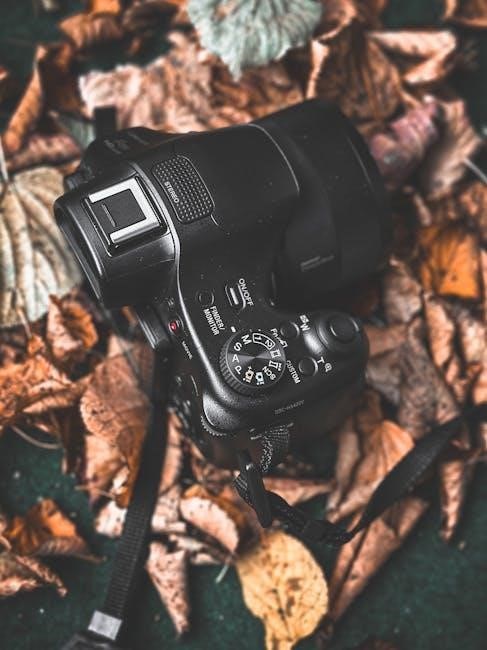
The Canon PowerShot SX70 HS boasts an impressive 20.3-megapixel High-Sensitivity CMOS sensor, delivering exceptional image quality even in low light. Its standout feature is the incredible 65x (21-1365mm equivalent) optical zoom lens, bringing distant subjects remarkably close. Benefit from DIGIC 8 Image Processor for fast operation and superior image processing.
This camera offers 4K UHD video recording, capturing stunningly detailed movies. Built-in Wi-Fi and Bluetooth allow for easy image transfer and remote camera control via smartphone. The vari-angle LCD screen provides flexible shooting angles, while Image Stabilization minimizes blur. It also includes creative shooting modes and a dedicated movie button for convenient video capture. Enjoy enhanced connectivity and a user-friendly experience with this versatile camera.

Getting Started with Your Camera
Before embarking on your photographic journey, ensure your camera is properly charged and a compatible memory card is inserted for optimal performance and storage.

Charging the Battery
Your Canon PowerShot SX70 HS utilizes a rechargeable battery pack. To charge, connect the provided AC adapter to the camera and a wall outlet. The charging indicator lamp will illuminate, typically red, to signify charging is in progress.
Allow approximately 3 to 4 hours for a full charge when the battery is completely depleted. The indicator light will usually change to green, or turn off, once fully charged. Canon recommends using only the supplied charger to avoid potential damage to the battery or camera.
For optimal battery life, it’s best to fully charge the battery before initial use and avoid frequent complete discharges. You can also charge the battery separately using the optional battery charger, offering convenience when traveling or needing a spare power source. Always refer to the safety precautions in the manual regarding battery handling.
Inserting and Removing Memory Cards
The Canon PowerShot SX70 HS supports SD, SDHC, and SDXC memory cards for storing your photos and videos. Locate the memory card slot, typically on the side of the camera, and open the cover. Insert the card into the slot, ensuring the correct orientation – usually label-side up – until it clicks into place.
To remove the card, gently press it inwards to release the locking mechanism. The card will then spring slightly outwards, allowing you to carefully pull it out. Avoid forcing the card, and always handle it by the edges to prevent damage to the contacts.
It’s crucial to power off the camera before inserting or removing a memory card to prevent data corruption. Regularly back up your images to a computer or other storage device to safeguard your precious memories. Refer to the manual for compatible card capacities and speeds.
Basic Camera Operations: Power & Mode Dial
To power on your Canon PowerShot SX70 HS, locate the power button – typically found on the top of the camera. Press it firmly, and the camera will initialize, extending the lens. The LCD screen will display the shooting view. To power off, press the power button again.
The Mode Dial, usually situated near the power button, allows you to select different shooting modes. Rotate the dial to choose from options like Auto, Program (P), Aperture Priority (Av), Shutter Priority (Tv), Manual (M), and various scene modes. Each mode offers a different level of control over camera settings.
Familiarize yourself with the Mode Dial’s positions to quickly access the desired shooting style. The Auto mode is ideal for beginners, while the manual modes provide experienced photographers with full creative control. Understanding these basic operations is key to unlocking your camera’s potential.
Understanding the Shooting Modes
The SX70 HS offers diverse shooting modes, from fully automatic simplicity to complete manual control, empowering users of all skill levels to capture stunning images.
Auto Mode: Point-and-Shoot Simplicity
Canon’s Auto mode on the PowerShot SX70 HS is designed for effortless photography. It’s the ideal setting for beginners or situations demanding quick, hassle-free shots. The camera intelligently analyzes the scene, automatically selecting the optimal settings for exposure, focus, and white balance.
This mode eliminates the need to adjust complex camera parameters, allowing you to simply point and shoot. It excels in well-lit conditions, delivering vibrant and sharp images with minimal effort. While offering convenience, Auto mode may not always perfectly capture your artistic vision in challenging lighting or unique scenarios.
However, for everyday snapshots and spontaneous moments, Auto mode provides a reliable and user-friendly experience. It’s a fantastic starting point for exploring your camera’s capabilities before venturing into more advanced shooting modes.
Program Mode (P): Taking Control
Program (P) mode on the Canon PowerShot SX70 HS offers a step up from Auto, granting you more creative control without the complexities of fully manual settings. The camera still automatically sets the aperture and shutter speed, but allows adjustments to other key parameters like ISO, white balance, and exposure compensation.
This mode is perfect for photographers who want to influence the final image without needing to understand the intricacies of aperture and shutter speed combinations. You can fine-tune the exposure to brighten or darken the scene, or adjust the white balance to achieve accurate colors.
Program mode provides a balance between convenience and control, making it a versatile option for a wide range of shooting situations. It’s an excellent choice for those transitioning from Auto mode and wanting to explore more advanced photographic techniques.
Aperture Priority (Av) Mode: Depth of Field Control
Aperture Priority (Av) mode on your Canon PowerShot SX70 HS empowers you to control the depth of field – the area of your image that appears in focus. You select the aperture (f-number), and the camera automatically determines the appropriate shutter speed for correct exposure.
A wider aperture (lower f-number, like f/2.8) creates a shallow depth of field, blurring the background and isolating your subject – ideal for portraits. Conversely, a narrower aperture (higher f-number, like f/16) yields a greater depth of field, keeping more of the scene sharp, perfect for landscapes.
Mastering Av mode allows for artistic control over your images, emphasizing specific elements and creating visually appealing effects. Experiment with different aperture settings to understand how they impact the look and feel of your photographs, enhancing your creative vision.
Shutter Priority (Tv) Mode: Motion Control
Shutter Priority (Tv) mode on the Canon PowerShot SX70 HS grants you control over the duration the camera’s sensor is exposed to light – the shutter speed. The camera automatically adjusts the aperture to achieve proper exposure, while you dictate how motion is captured.
Fast shutter speeds (e.g., 1/1000s) freeze motion, ideal for sports or wildlife photography. Slower shutter speeds (e.g., 1/30s) blur motion, conveying a sense of movement – perfect for waterfalls or light trails. Be mindful of camera shake with slower speeds; a tripod is recommended.
Experimenting with Tv mode unlocks creative possibilities. Capture the crisp detail of a hummingbird’s wings or the ethereal flow of a river. Understanding shutter speed is crucial for controlling the visual narrative of your images, adding dynamism and impact.
Manual Mode (M): Full Creative Control
Manual (M) mode on your Canon PowerShot SX70 HS provides ultimate control over both aperture and shutter speed, allowing for complete creative freedom. Unlike automatic modes, the camera doesn’t make decisions for you; you dictate every aspect of the exposure.
This mode requires a solid understanding of the exposure triangle – the relationship between aperture, shutter speed, and ISO. Adjust aperture for depth of field, shutter speed to control motion blur, and ISO to manage sensitivity in low light.
Manual mode is ideal for challenging lighting situations or when you have a specific artistic vision. It allows for precise control, enabling you to capture images exactly as you envision them. Mastering M mode unlocks your full photographic potential, offering unparalleled creative expression.

Navigating the Menu System
The Canon SX70 HS menu offers extensive customization. Explore settings for image quality, autofocus, and various functions to personalize your shooting experience effectively.
Menu Structure Overview
The Canon PowerShot SX70 HS menu system is logically organized for intuitive navigation. Upon pressing the MENU button, you’ll encounter a main menu divided into several tabs, each represented by a distinct icon. These tabs include Shooting, AF (Autofocus), Setup, Wireless, and others.
Within each tab, you’ll find a list of related settings. Use the directional buttons on the rear control dial to highlight desired options, and press the SET button to access them. Sub-menus are often nested, allowing for granular control over camera functions. The display clearly indicates the current setting and available choices.
Understanding this structure is key to efficiently customizing your SX70 HS. Don’t hesitate to explore each tab to discover the full range of available options. The manual provides detailed explanations of each setting, ensuring you can tailor the camera to your specific needs and preferences. Remember to use the DISP button to see the current settings on the LCD screen.
Customizing Camera Settings
The Canon PowerShot SX70 HS offers extensive customization options to personalize your shooting experience. Within the menu system, navigate to the Setup tab to adjust fundamental settings like date/time, display brightness, and sound volume. The Shooting tab allows modification of image quality, ISO range, and white balance.
Further personalization is possible through the Custom Functions (C.Fn) menu. Here, you can assign specific operations to buttons, tailoring the camera’s controls to your shooting style. Wireless settings enable easy connection to smartphones and computers for image transfer and remote control.
Experiment with these settings to optimize the SX70 HS for your preferred subjects and shooting conditions. Remember to consult the manual for detailed explanations of each option. Saving custom settings allows you to quickly recall your preferred configurations, streamlining your workflow and ensuring consistent results.
Zoom and Focus Functions
Master the SX70 HS’s powerful zoom and precise focusing capabilities. This section details utilizing the lens and selecting optimal focus modes for various shooting scenarios.
Using the Zoom Lens
The Canon PowerShot SX70 HS boasts an impressive 65x optical zoom lens, offering incredible reach for capturing distant subjects. To operate the zoom, utilize the zoom lever surrounding the shutter button. Pushing it towards the ‘W’ (wide-angle) position decreases magnification, while pushing towards the ‘T’ (telephoto) position increases it.
Smooth, consistent zooming is key to stable shots. Avoid abrupt changes in zoom during recording, as this can result in shaky footage. The SX70 HS also features Digital Zoom, which extends the zoom range beyond the optical limit, but be aware that digital zoom can reduce image quality.
For precise framing, use the zoom incrementally. Pay attention to the zoom indicator on the LCD screen, which displays the current zoom ratio. Remember that at maximum zoom, a tripod is highly recommended to minimize camera shake and ensure sharp, detailed images. Experiment with different zoom levels to discover creative perspectives!
Focus Modes: Single, Continuous, Manual
The Canon PowerShot SX70 HS offers three primary focus modes to suit various shooting scenarios. Single AF (One-Shot AF) is ideal for stationary subjects; the camera focuses when you half-press the shutter button and locks focus until you shoot.
Continuous AF (AI Servo AF) tracks moving subjects, continuously adjusting focus as they move. This is perfect for action photography, ensuring your subject remains sharp. Hold the shutter button half-pressed to maintain continuous focusing.
Manual Focus (MF) gives you complete control over focusing. Select MF from the menu and use the focus ring on the lens to adjust focus precisely. This is useful for macro photography or situations where autofocus struggles. Utilize focus peaking for assistance in achieving critical sharpness when using manual focus. Experiment with each mode to understand their strengths and weaknesses!